Newsletter · Sep 3, 2026
One in six private-sector workers was in a union. Now it is one in seventeen. — and 11 more charts
Economy
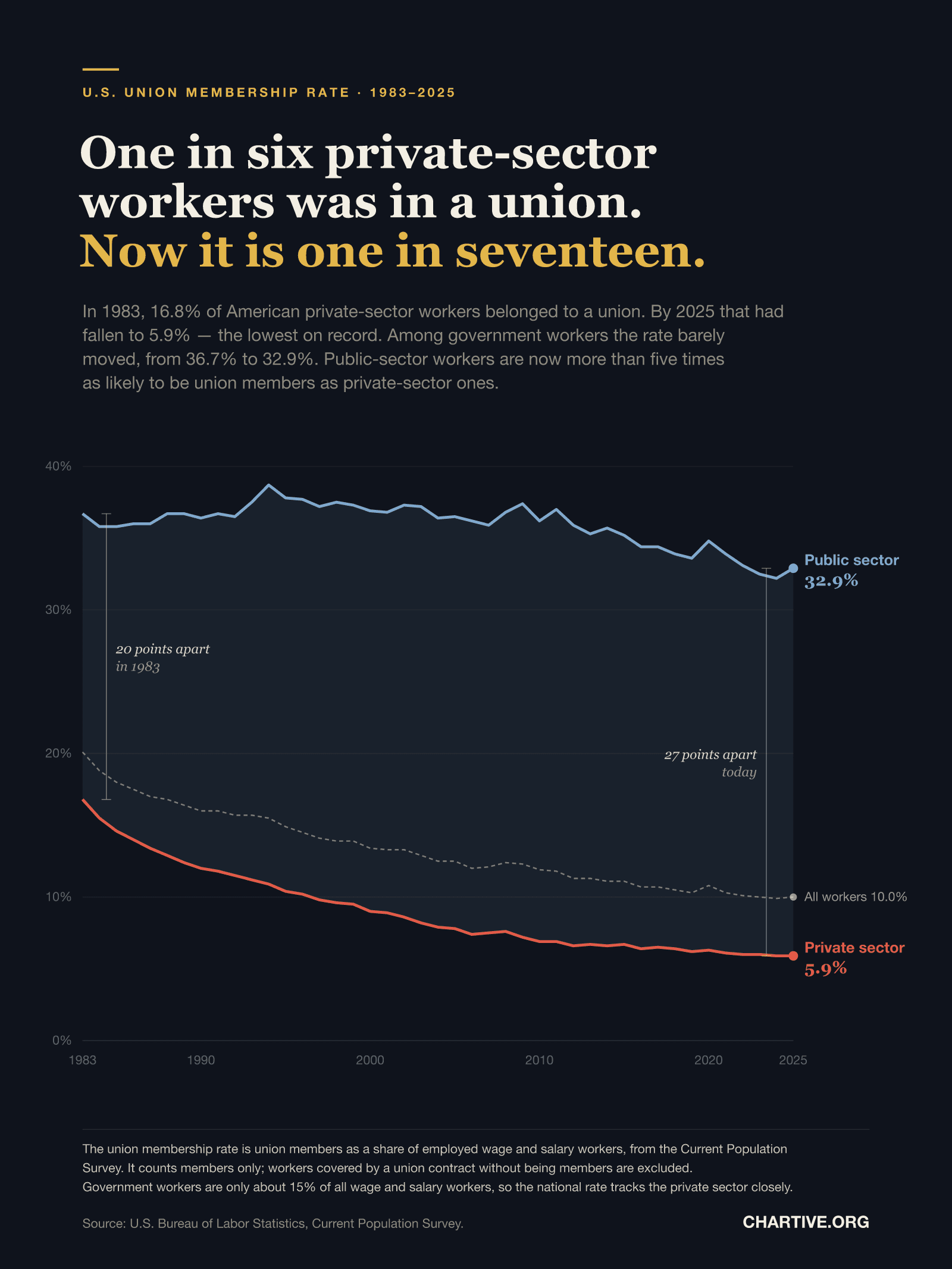
One in six private-sector workers was in a union. Now it is one in seventeen.
In 1983, 16.8% of American private-sector workers belonged to a union. By 2025 that had fallen to 5.9% — the lowest on record — while the rate among government workers barely moved.
Chartive Editorial
Economy
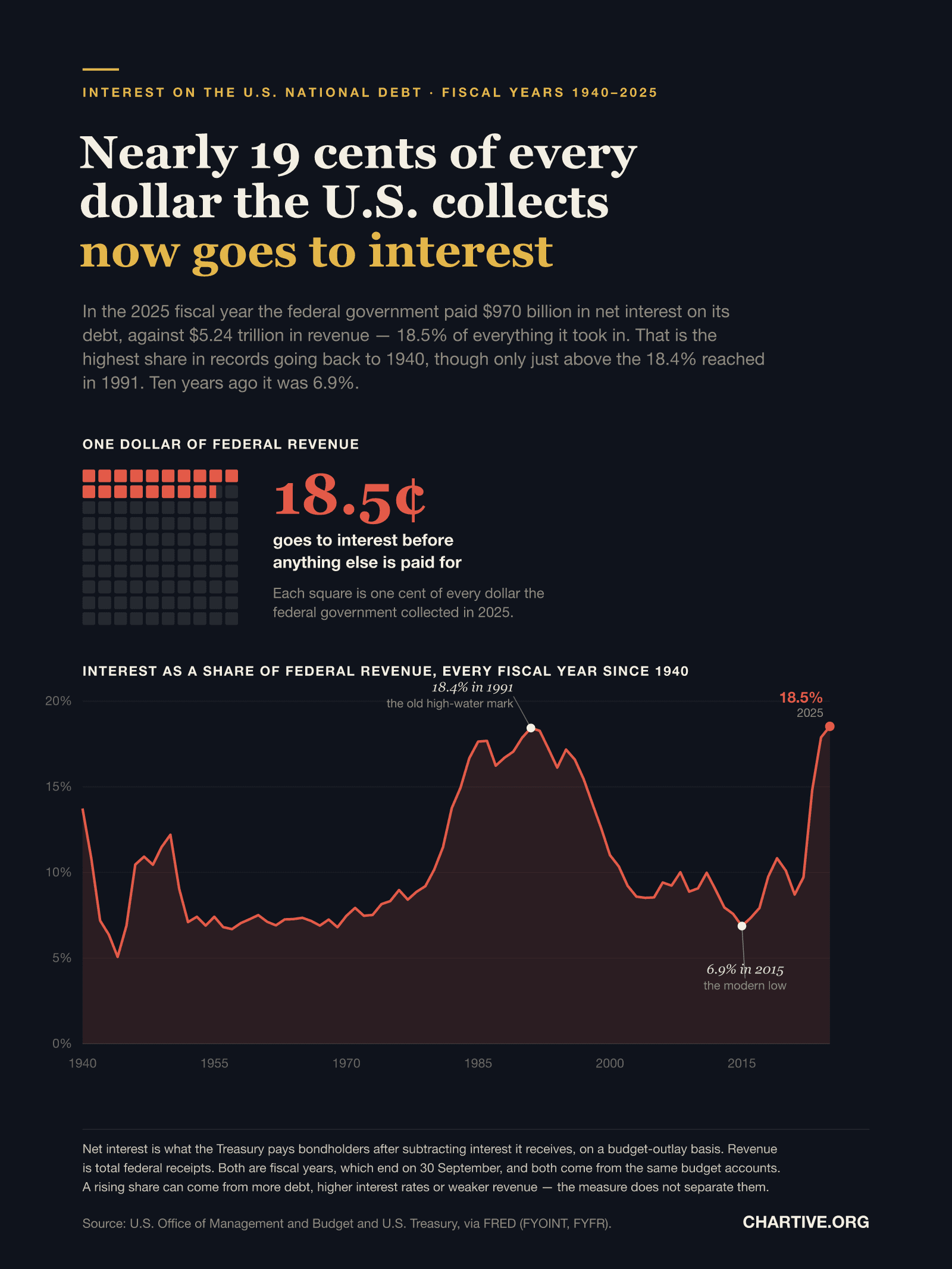
Nearly 19 cents of every dollar the U.S. collects now goes to interest
In the 2025 fiscal year the federal government paid $970 billion in net interest on its debt, against $5.24 trillion in revenue — 18.5% of everything it took in, the highest share in records going back to 1940.
Chartive Editorial
Health
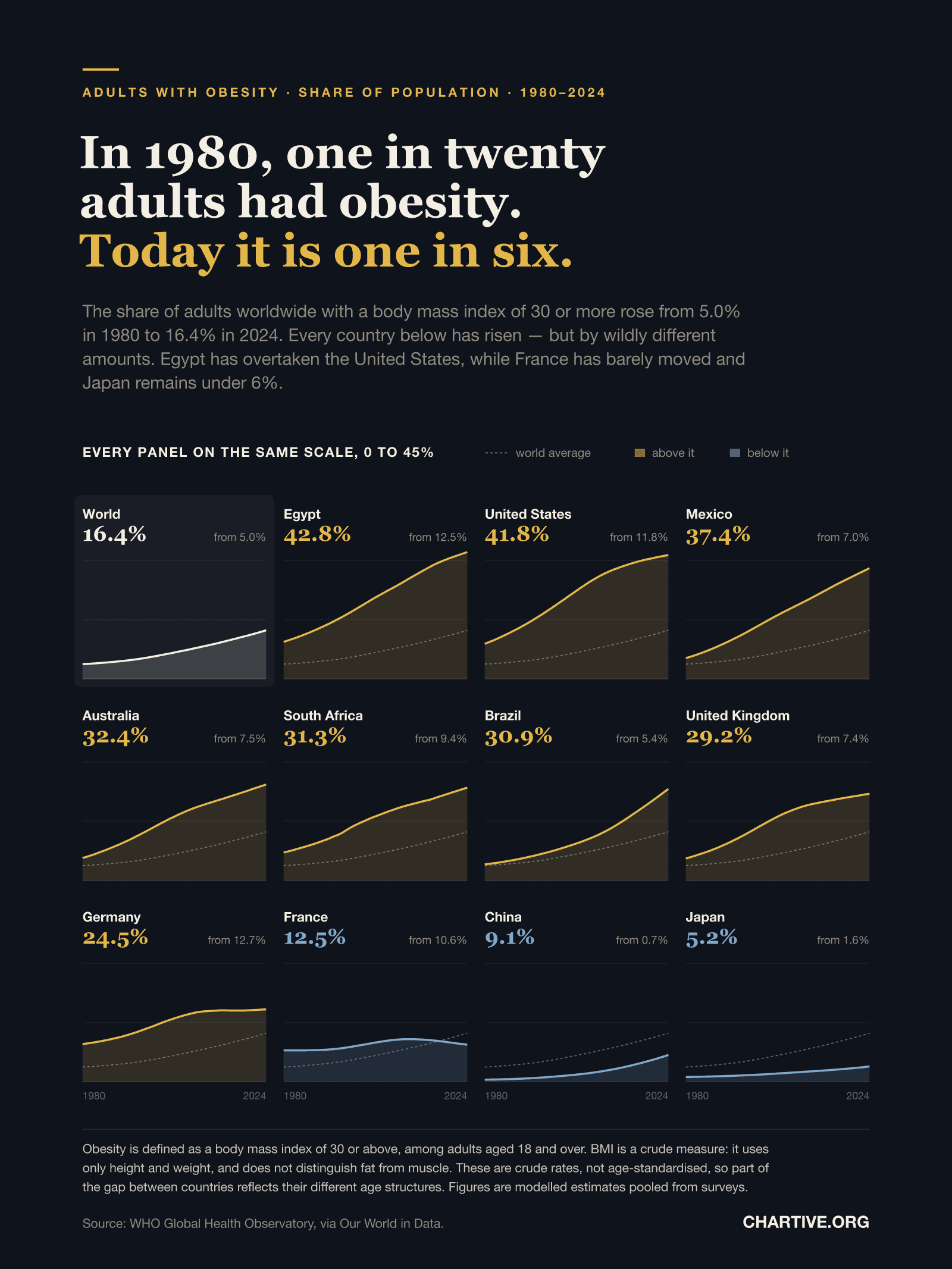
In 1980, one in twenty adults had obesity. Today it is one in six.
The share of adults worldwide with a body mass index of 30 or more rose from 5.0% in 1980 to 16.4% in 2024. Every country has risen — but by wildly different amounts.
Chartive Editorial
Demographics
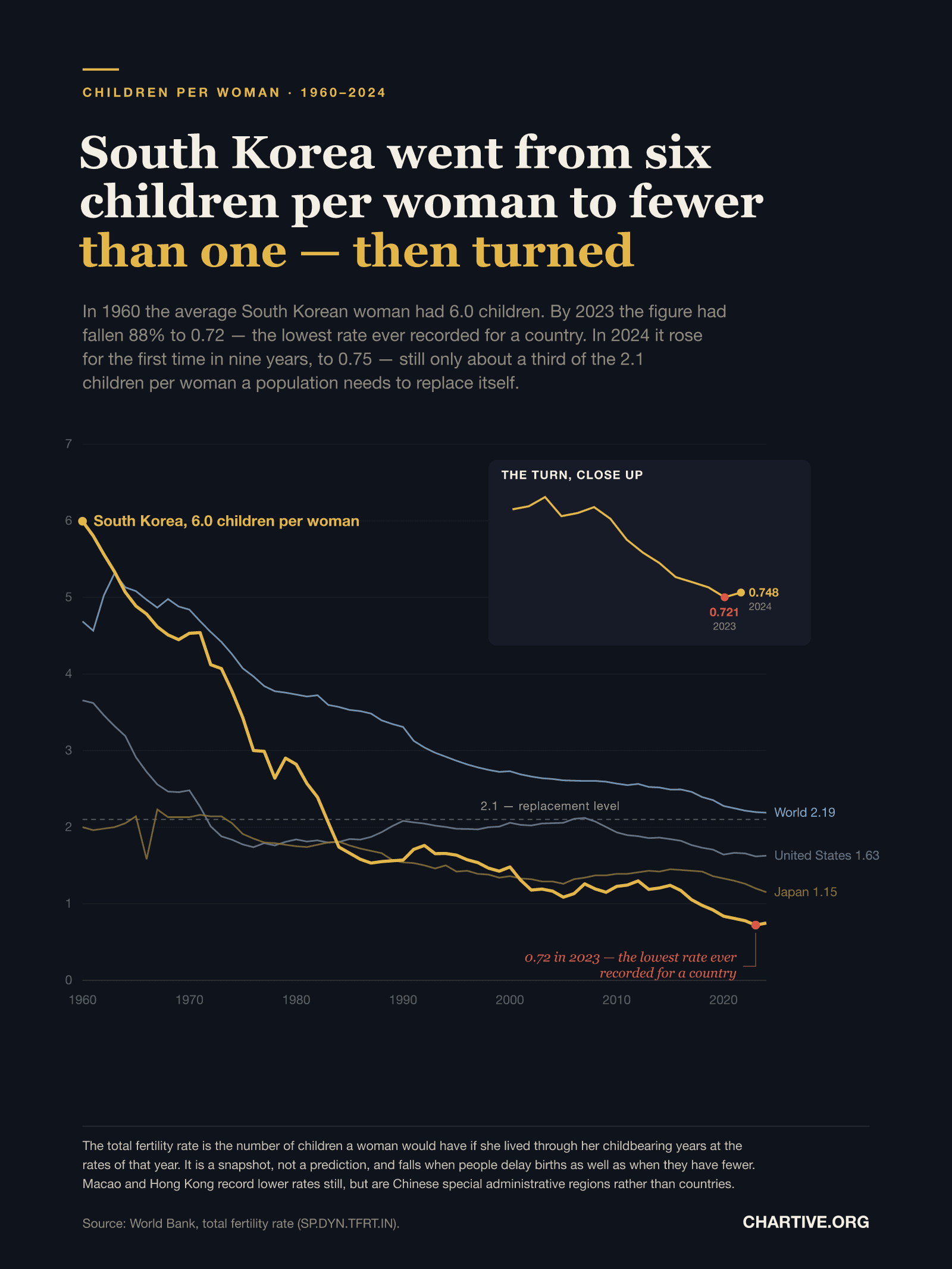
South Korea went from six children per woman to fewer than one — then turned
In 1960 the average South Korean woman had 6.0 children. By 2023 the figure had fallen 88% to 0.72 — the lowest rate ever recorded for a country. In 2024 it rose for the first time in nine years.
Chartive Editorial
Climate
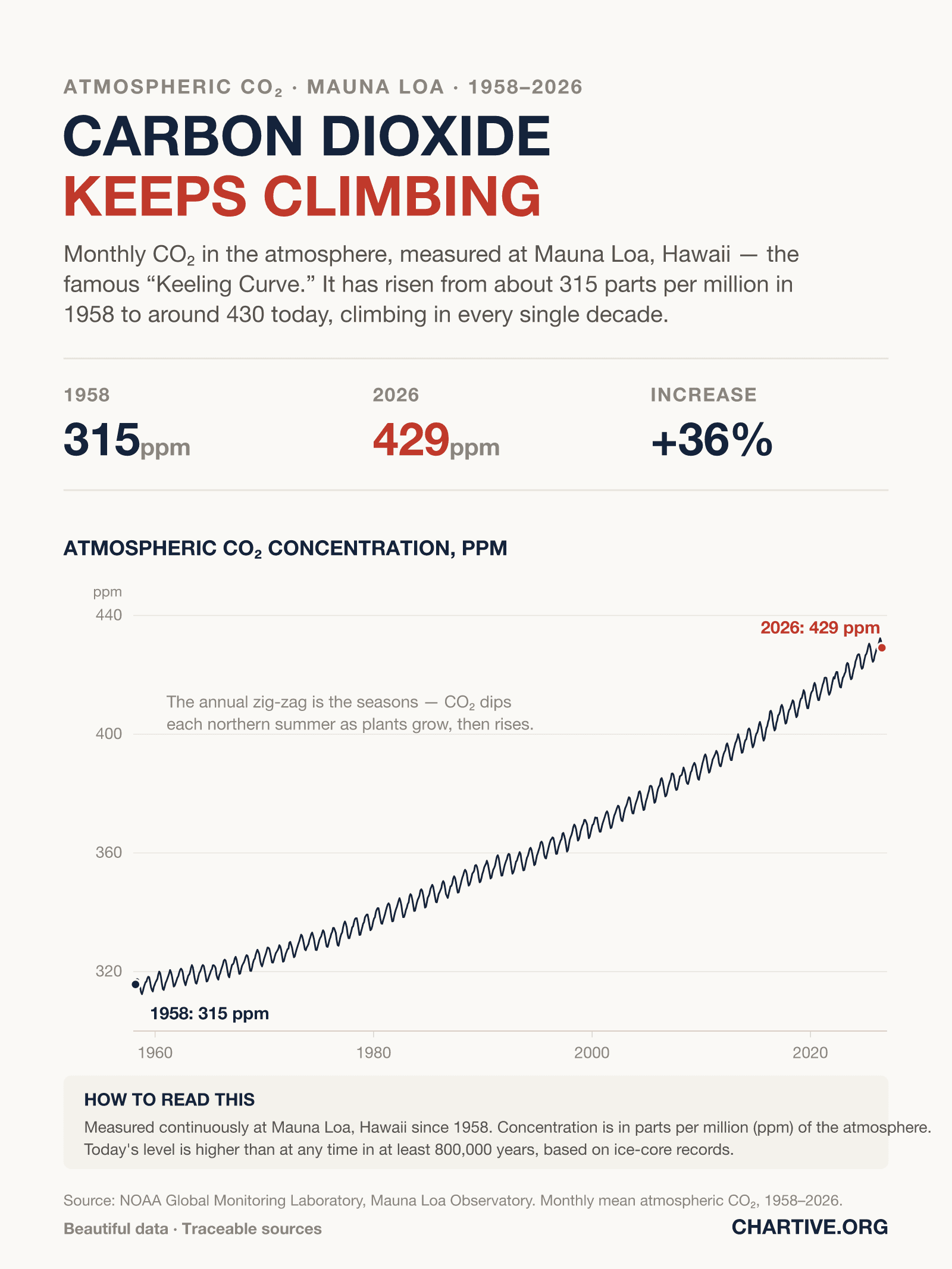
Carbon dioxide keeps climbing
Monthly CO₂ in the atmosphere, measured at Mauna Loa, Hawaii — the famous “Keeling Curve.” It has risen from about 315 parts per million in 1958 to around 430 today, climbing in every single decade.
Daniel Okafor
Society
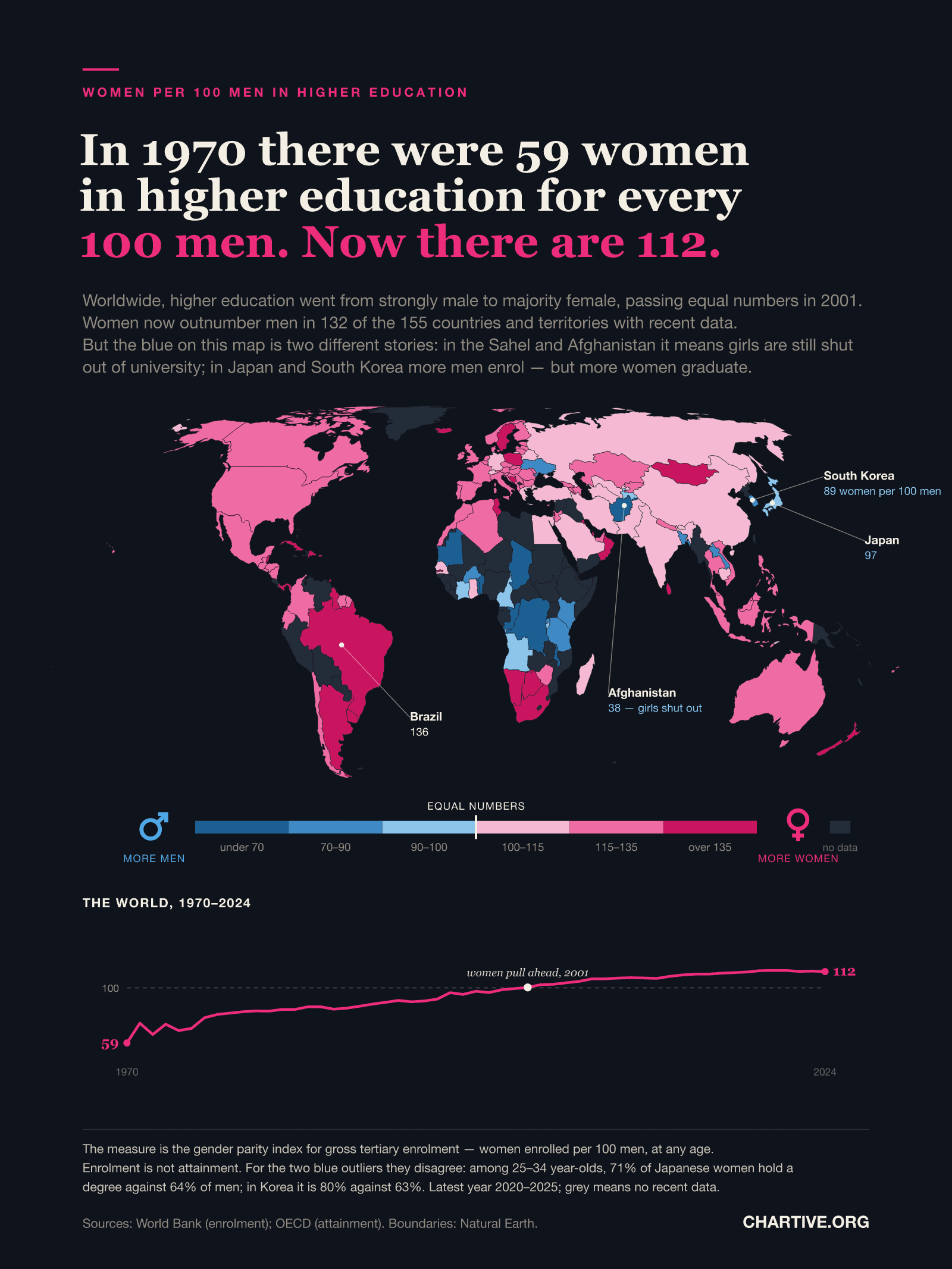
In 1970 there were 59 women in higher education for every 100 men. Now there are 112.
Worldwide, higher education went from strongly male to majority female, passing equal numbers in 2001. Women now outnumber men in 132 of the 155 countries and territories with recent data — but the exceptions are two very different stories.
Chartive Editorial
Economy
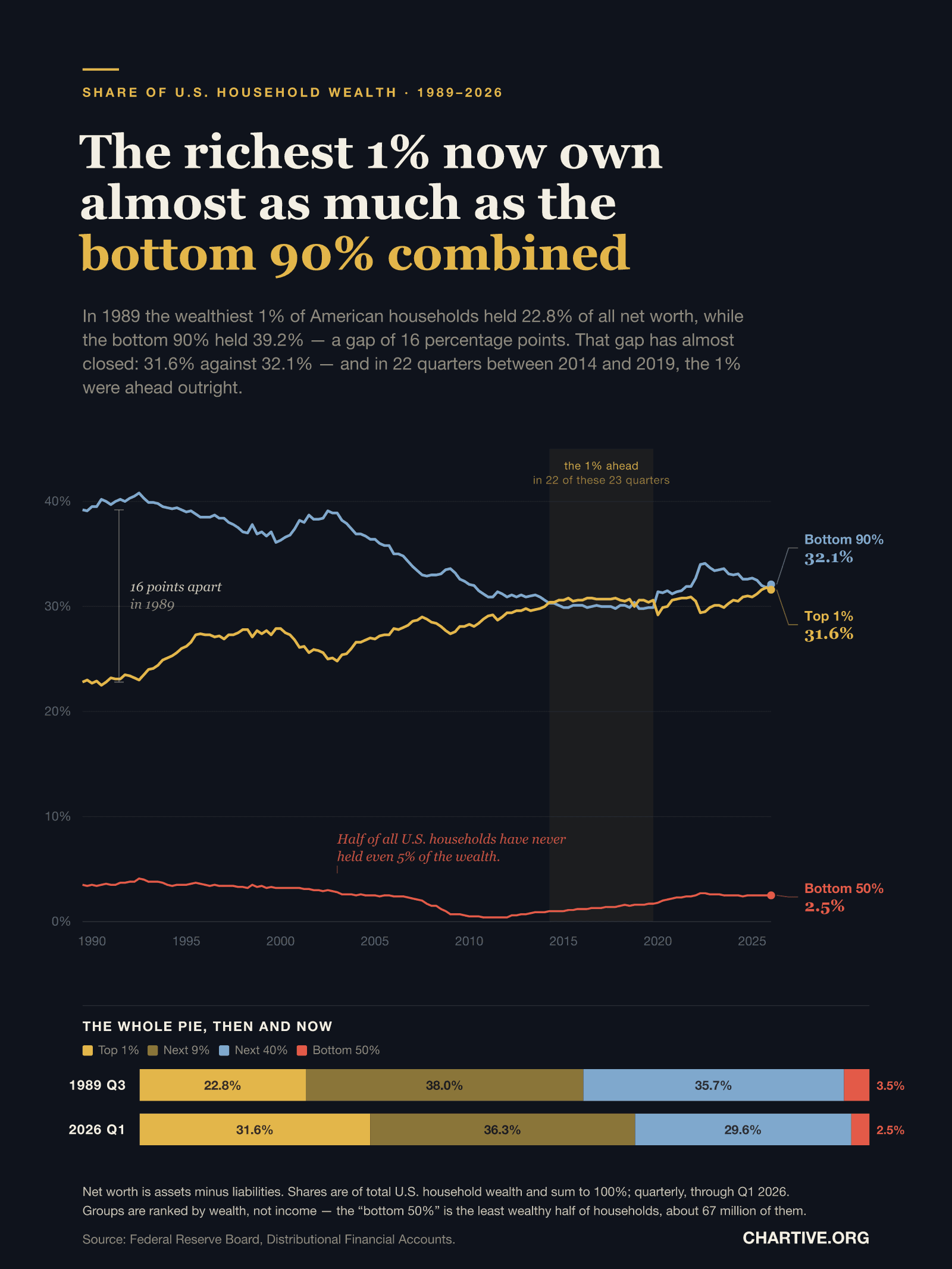
The richest 1% now own almost as much as the bottom 90% combined
In 1989 the wealthiest 1% of American households held 22.8% of all net worth and the bottom 90% held 39.2% — a gap of 16 percentage points. That gap has almost closed: 31.6% against 32.1%.
Chartive Editorial
Technology
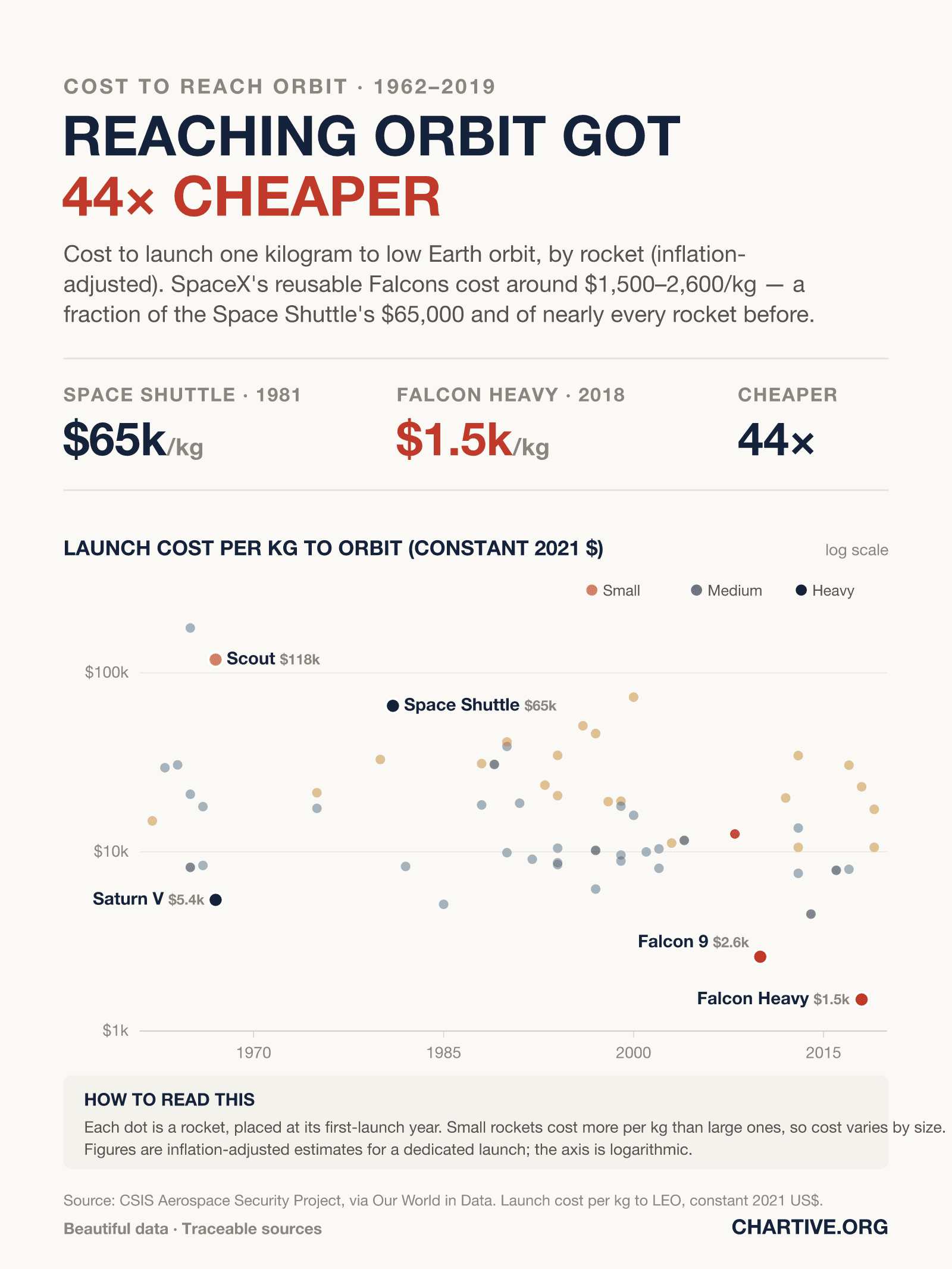
Reaching orbit got 44× cheaper
Cost to launch one kilogram to low Earth orbit, by rocket (inflation-adjusted). SpaceX's reusable Falcons cost around $1,500–2,600/kg — a fraction of the Space Shuttle's $65,000 and of nearly every rocket before them.
Chartive Editorial
Climate
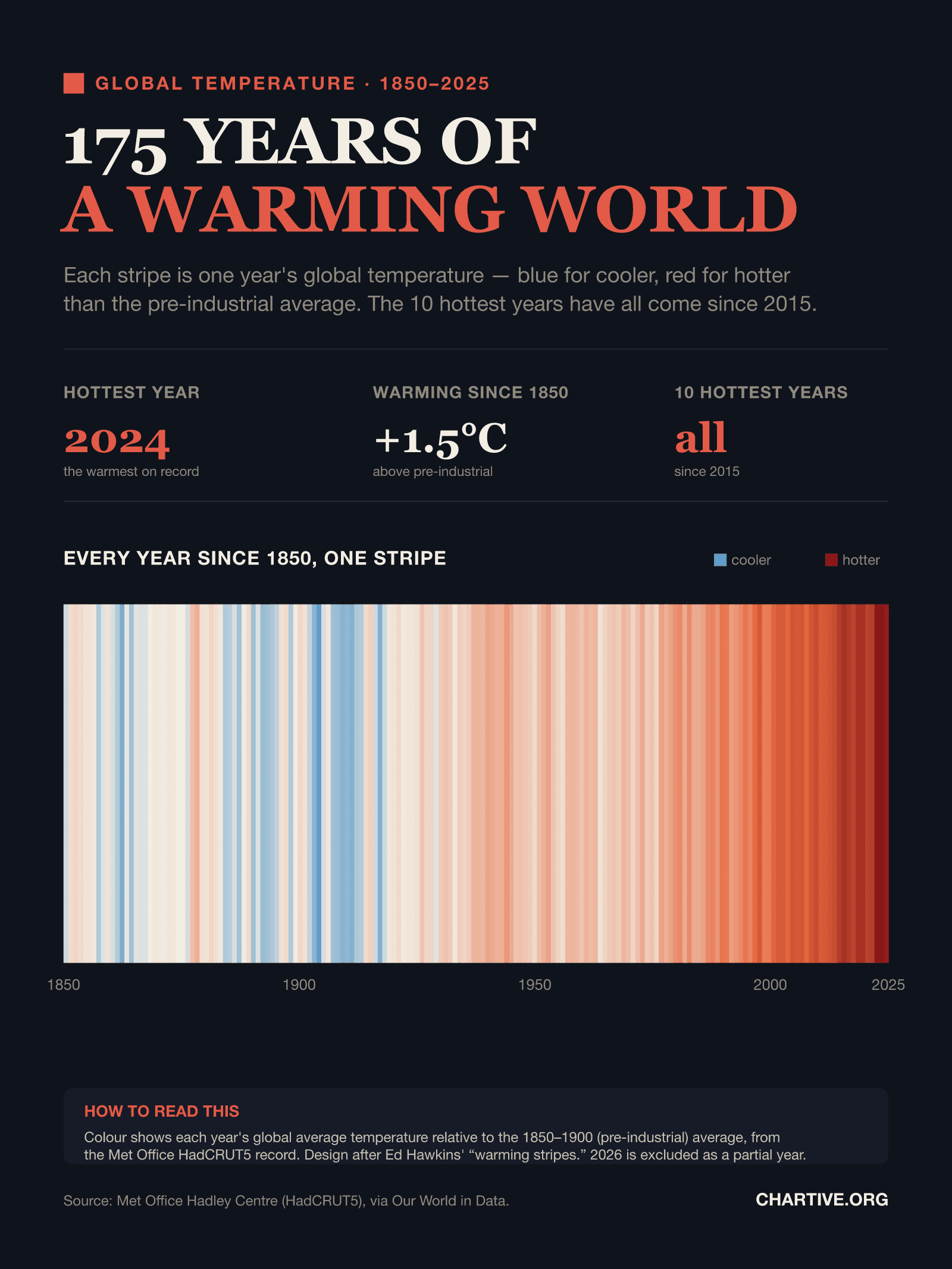
175 years of a warming world
Each stripe is one year's global temperature from 1850 to 2025 — blue for cooler, red for hotter than the pre-industrial average. The ten hottest years on record have all come since 2015.
Chartive Editorial
Society
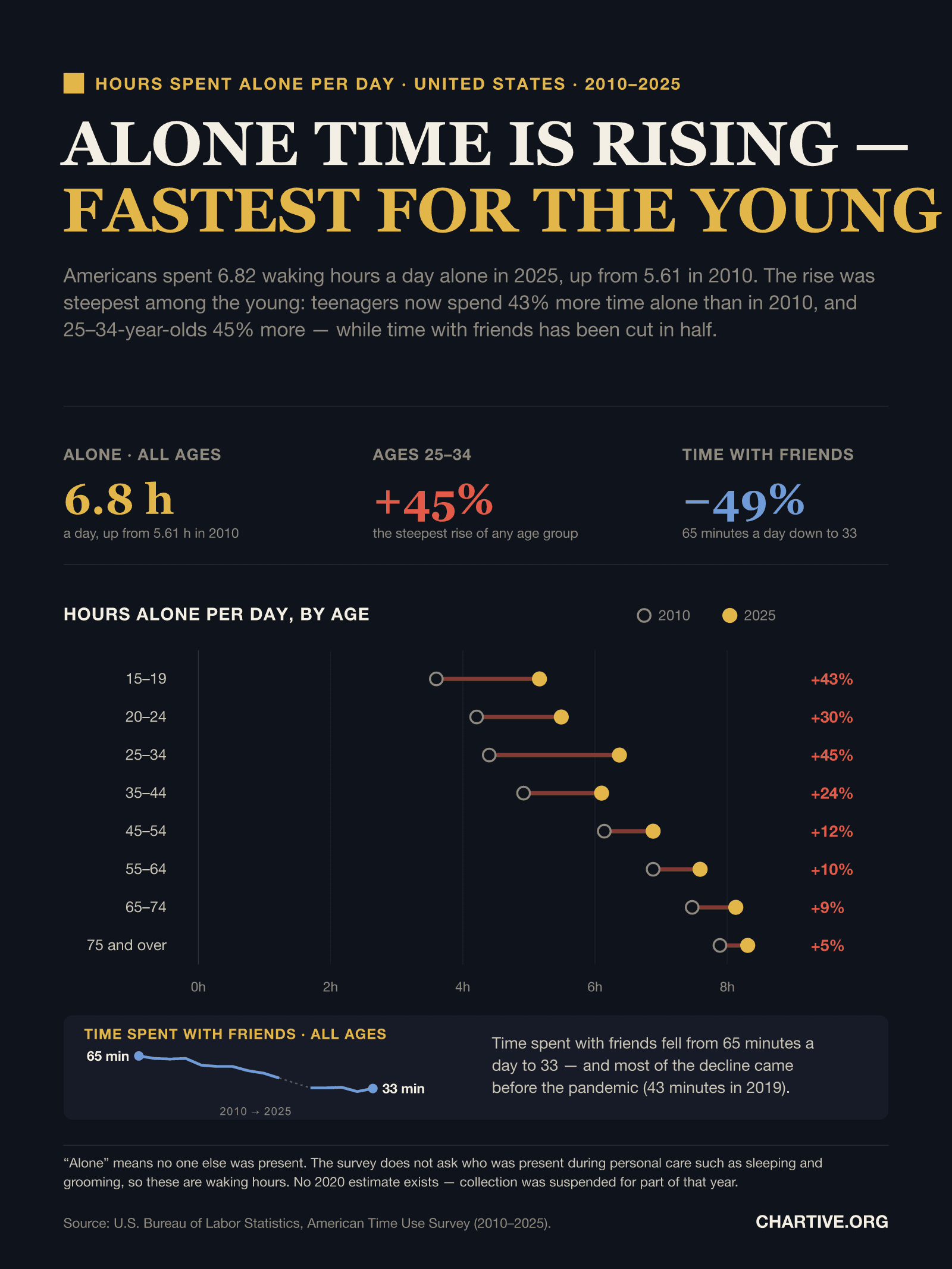
Alone time is rising — fastest for the young
Americans spent 6.82 waking hours a day alone in 2025, up from 5.61 in 2010. Teenagers now spend 43% more time alone than they did in 2010, and 25–34-year-olds 45% more — while time with friends has been cut in half.
Chartive Editorial
Economy
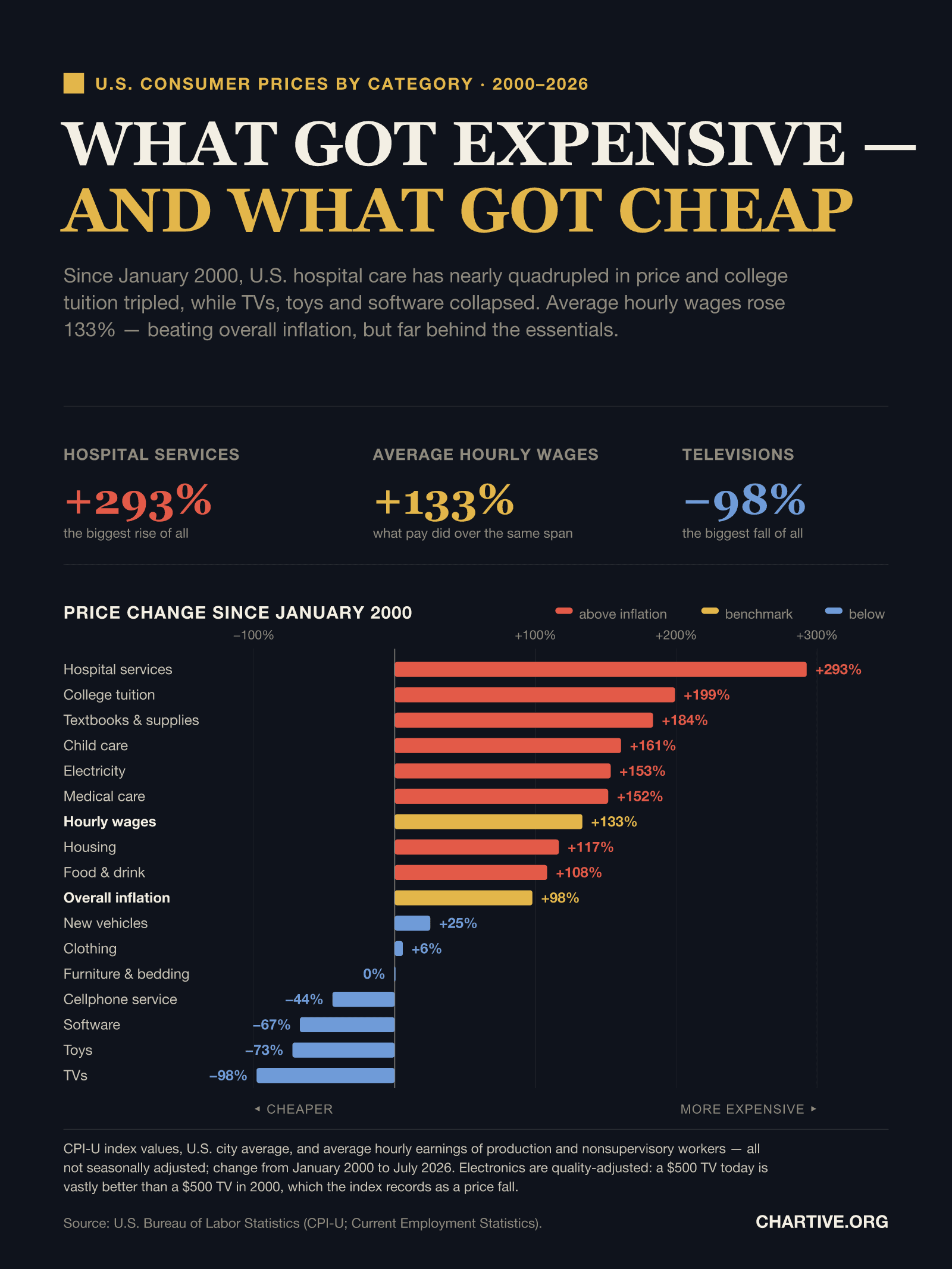
What got expensive — and what got cheap
Since January 2000, U.S. hospital care has nearly quadrupled in price and college tuition tripled, while TVs, toys and software collapsed. Average hourly wages rose 133% — beating overall inflation, but far behind the essentials.
Chartive Editorial
Economy
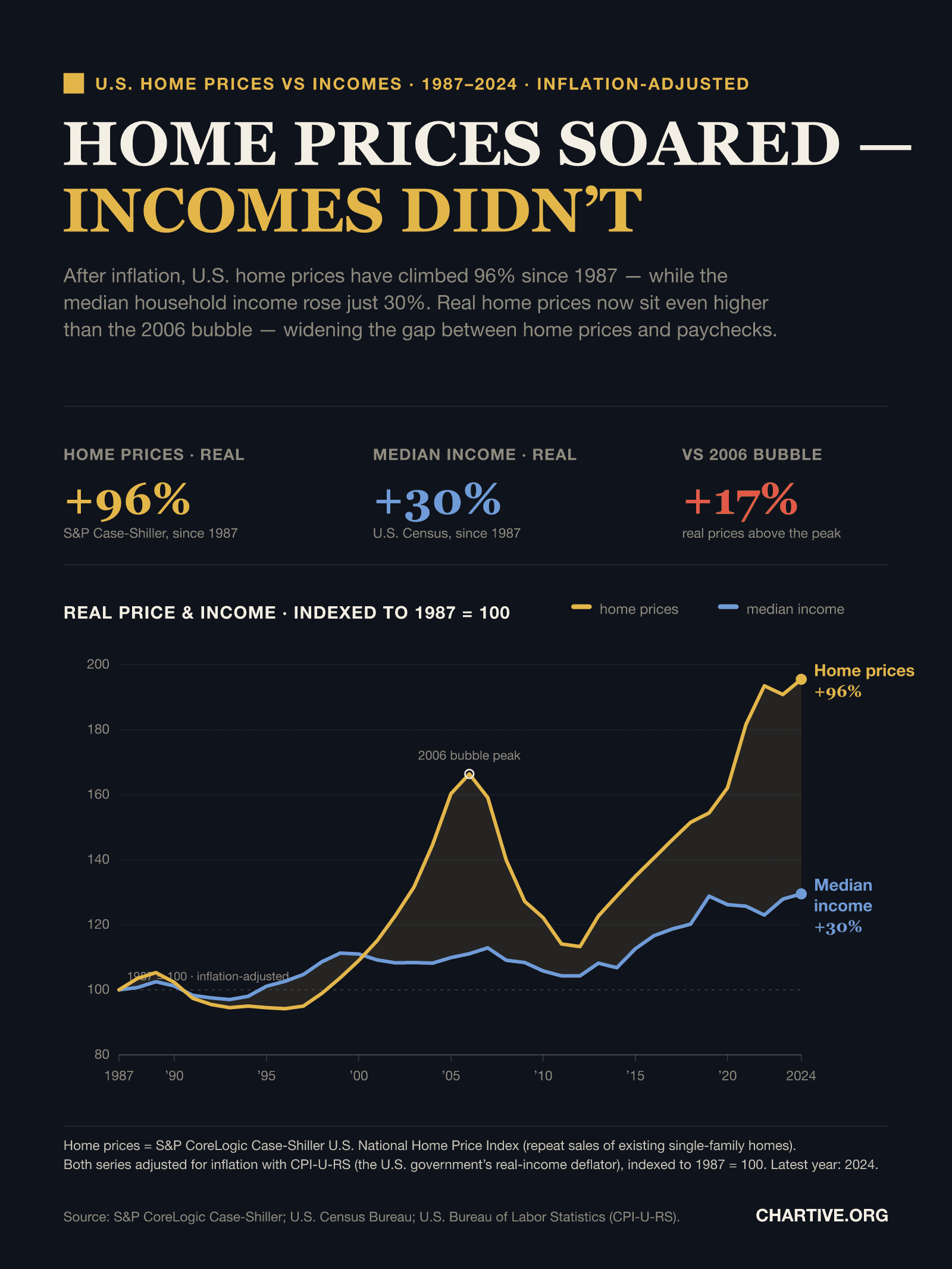
Home prices soared — incomes didn't
After inflation, U.S. home prices climbed 96% between 1987 and 2024 while the median household income rose just 30% — pushing real prices above even the 2006 bubble.
Chartive Editorial
Get the next issue in your inbox
The best new data stories every week — each with its sources and the raw data to download.
Double opt-in — we'll email you to confirm. Unsubscribe anytime. See our privacy policy.