Beautiful data · Traceable sources
Discover the world through data.
Original visualizations with the sources, methodology, and limits shown right under every chart.
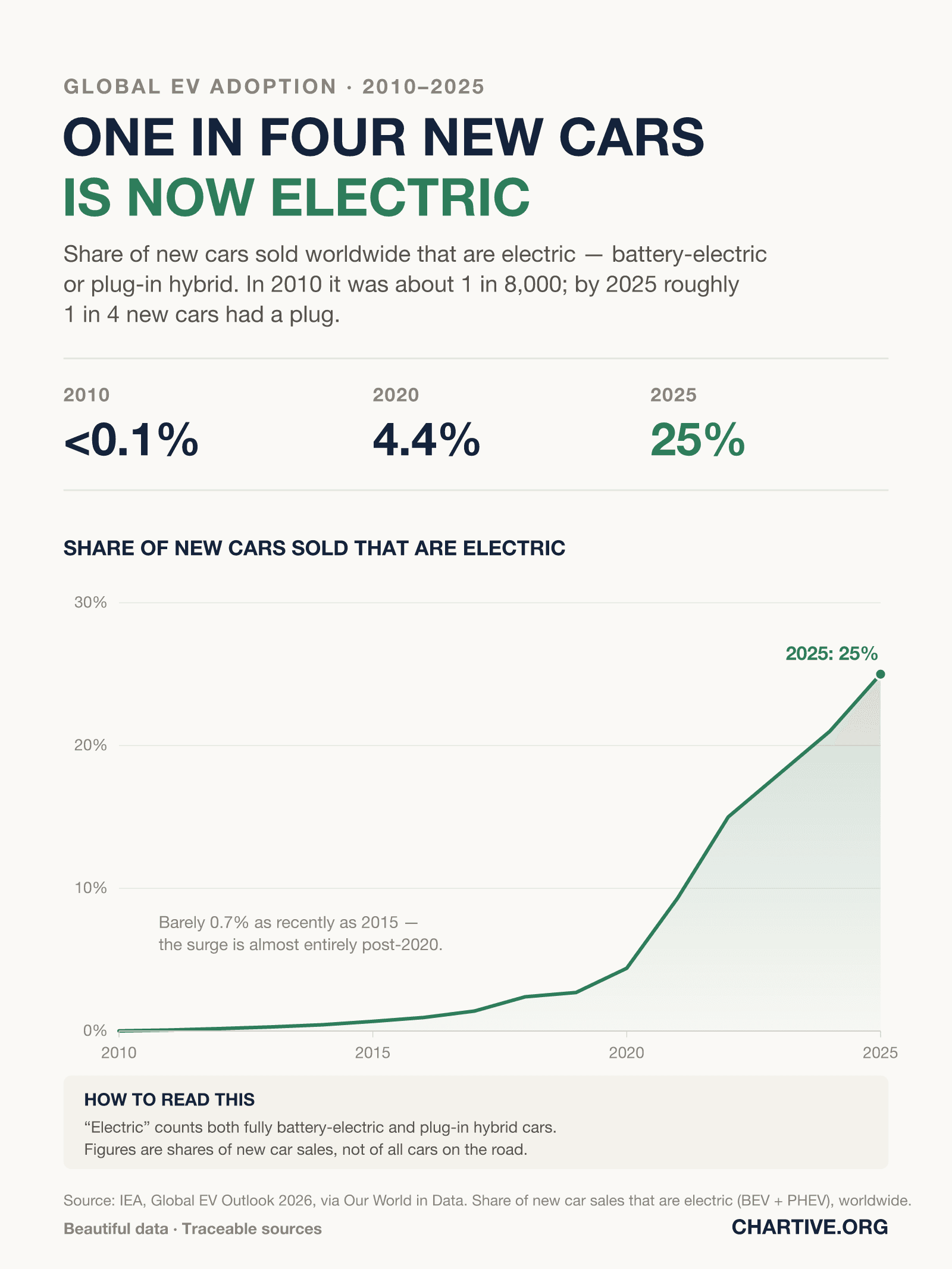
Chart of the day
One in four new cars is now electric
Share of new cars sold worldwide that are electric — battery-electric or plug-in hybrid. In 2010 it was about 1 in 8,000; by 2025 roughly one in four new cars had a plug.
See today's pick →Trending
See trending →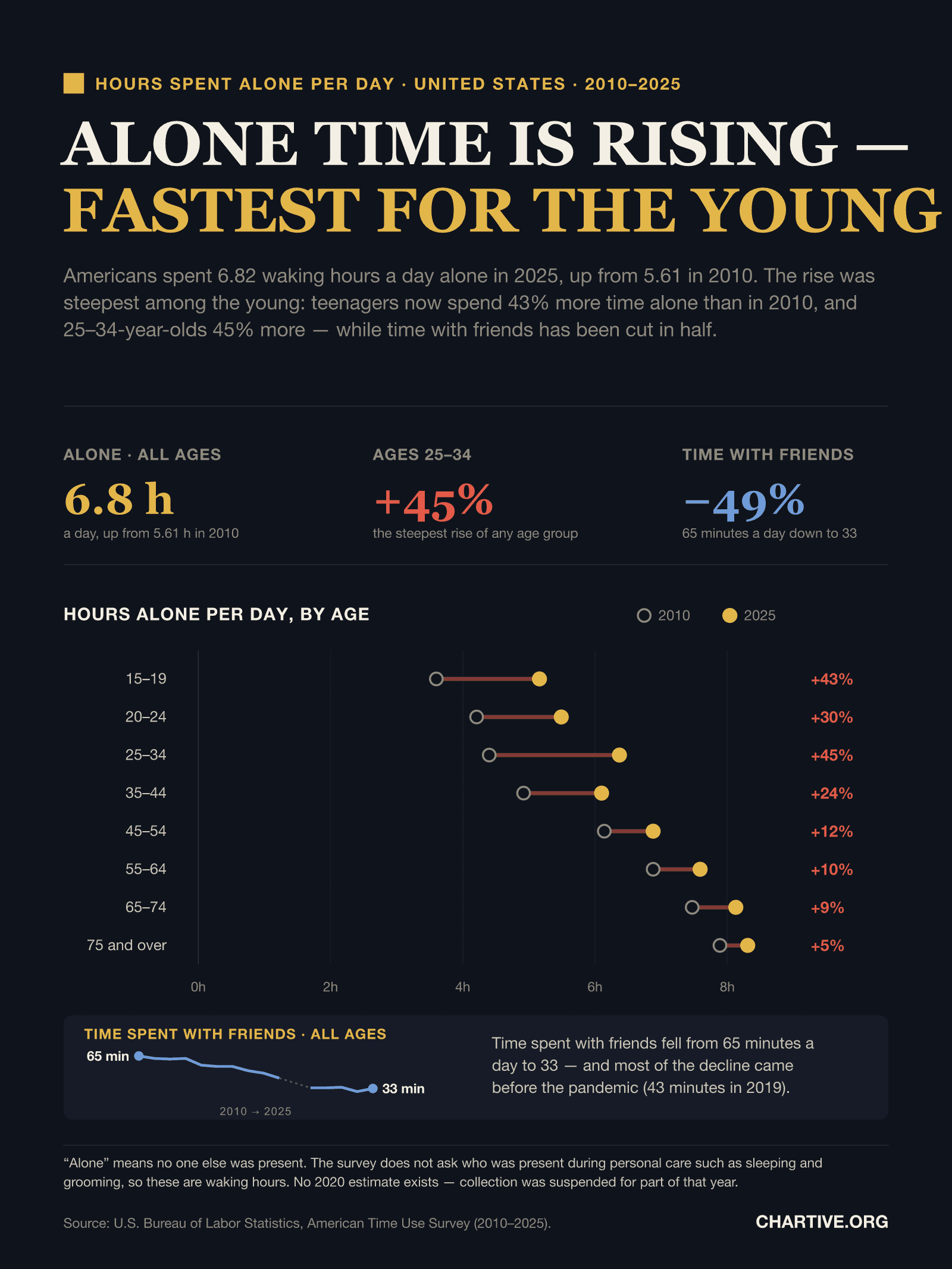
Society
Alone time is rising — fastest for the young
Americans spent 6.82 waking hours a day alone in 2025, up from 5.61 in 2010. Teenagers now spend 43% more time alone than they did in 2010, and 25–34-year-olds 45% more — while time with friends has been cut in half.
Chartive Editorial
Society
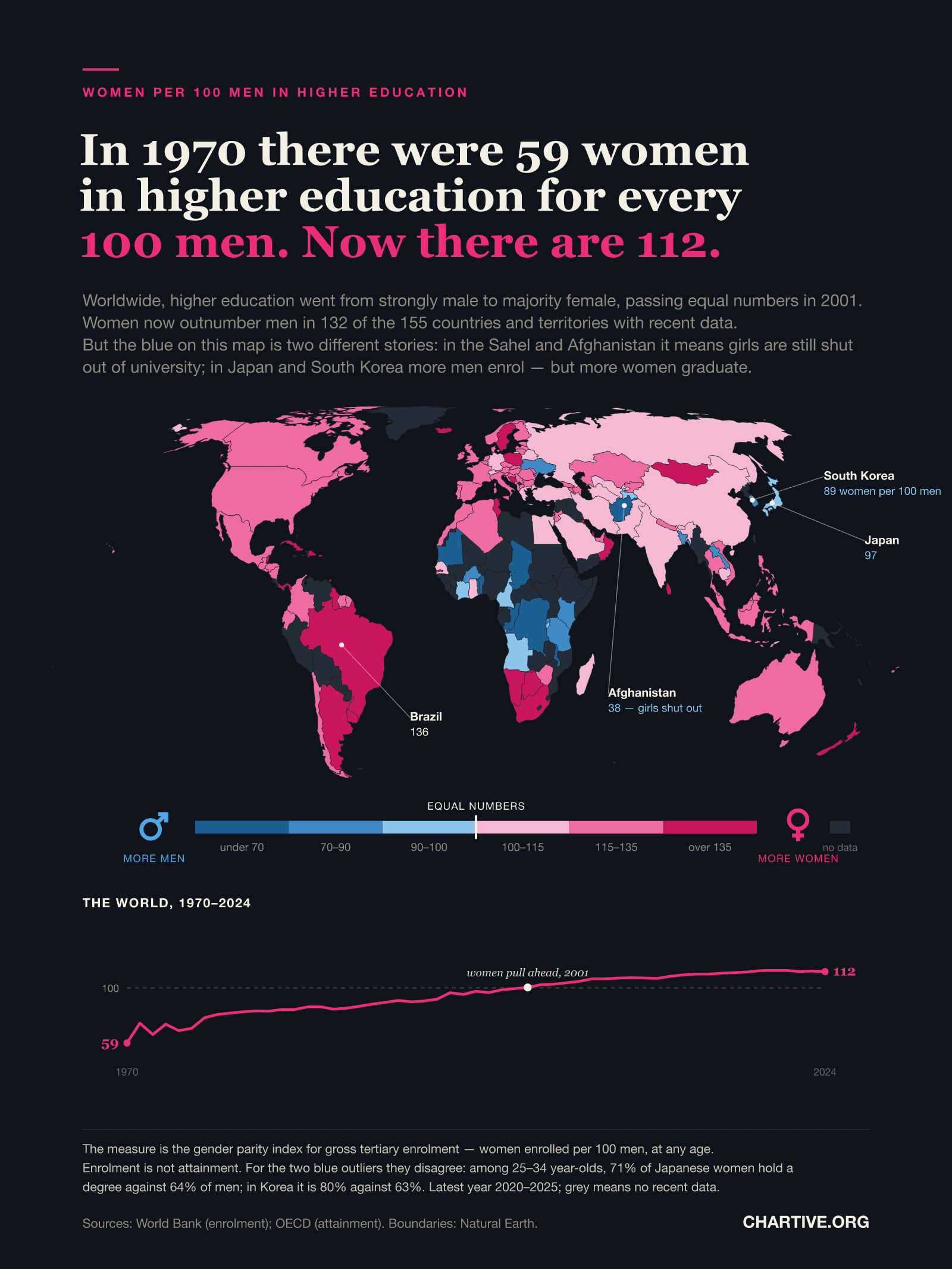
In 1970 there were 59 women in higher education for every 100 men. Now there are 112.
Worldwide, higher education went from strongly male to majority female, passing equal numbers in 2001. Women now outnumber men in 132 of the 155 countries and territories with recent data — but the exceptions are two very different stories.
Chartive Editorial
Economy
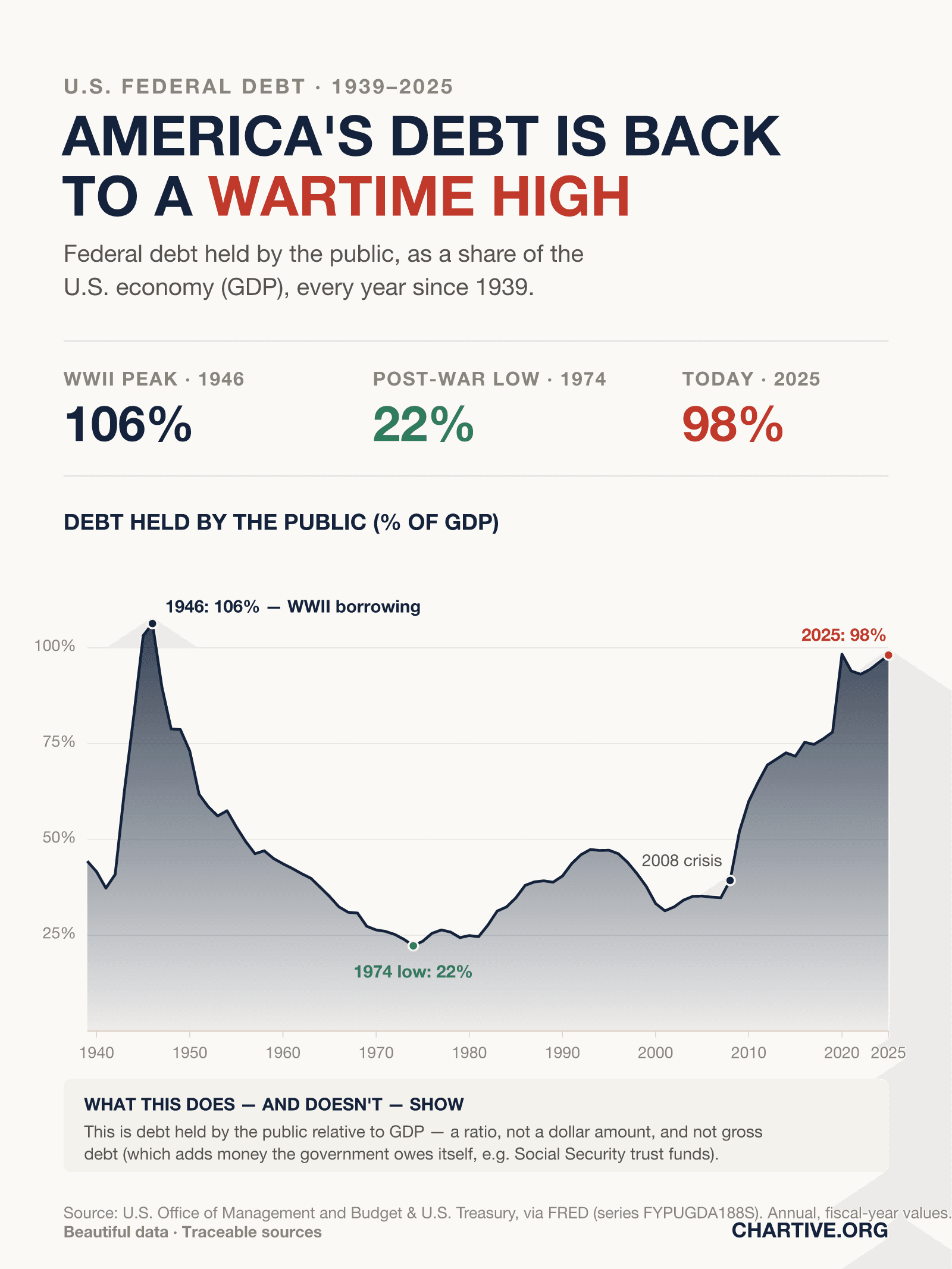
America's debt is back near its World War II peak
Federal debt held by the public reached about 98% of U.S. GDP in 2025 — close to the record 106% set in 1946, after falling as low as 22% in 1974.
Mara Ellison
Health
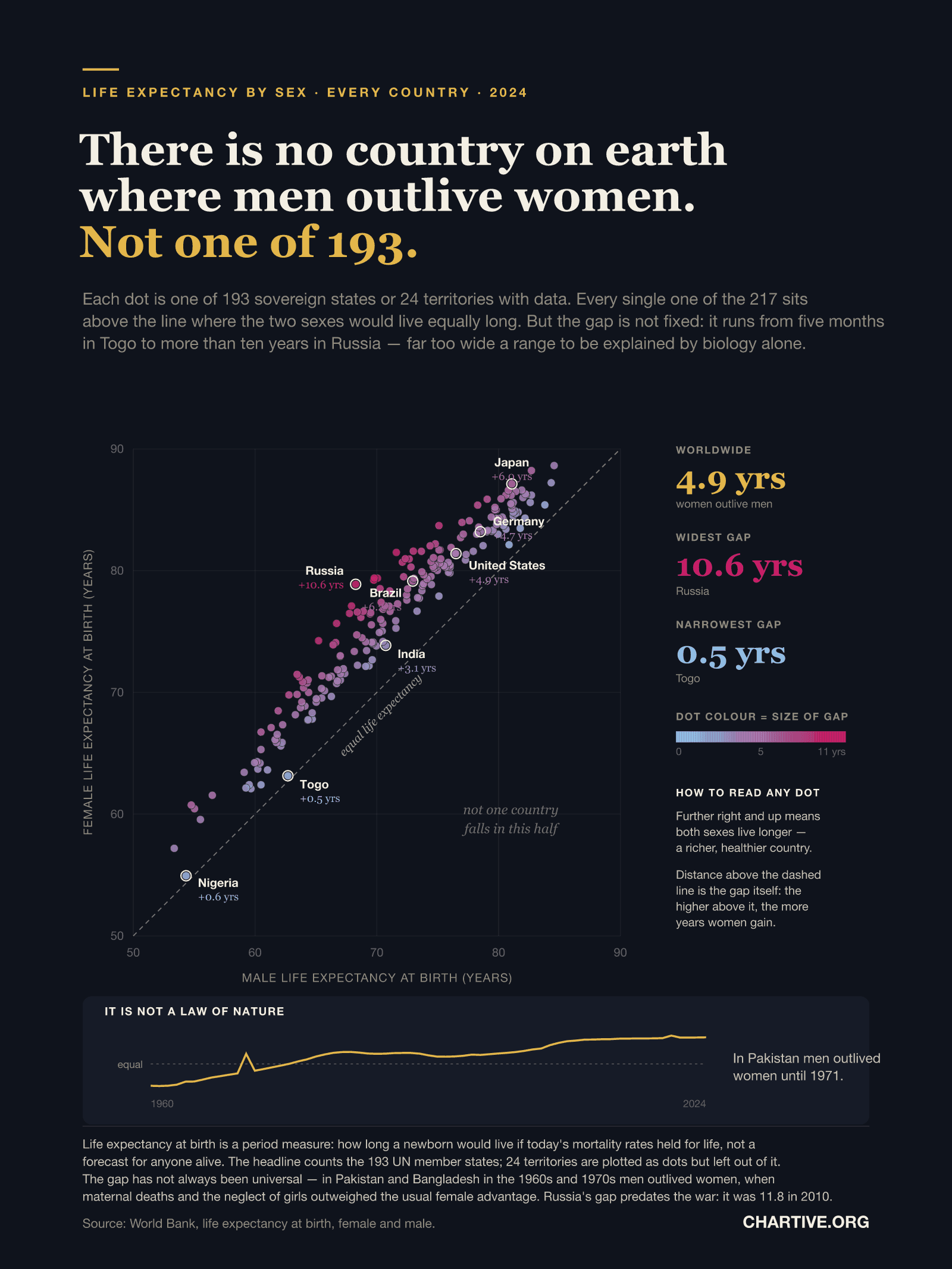
There is no country on earth where men outlive women
Each dot is one of 193 sovereign states or 24 territories with data. Every single one of the 217 sits above the line where the two sexes would live equally long — but the gap runs from five months in Togo to more than ten years in Russia.
Chartive Editorial
Economy
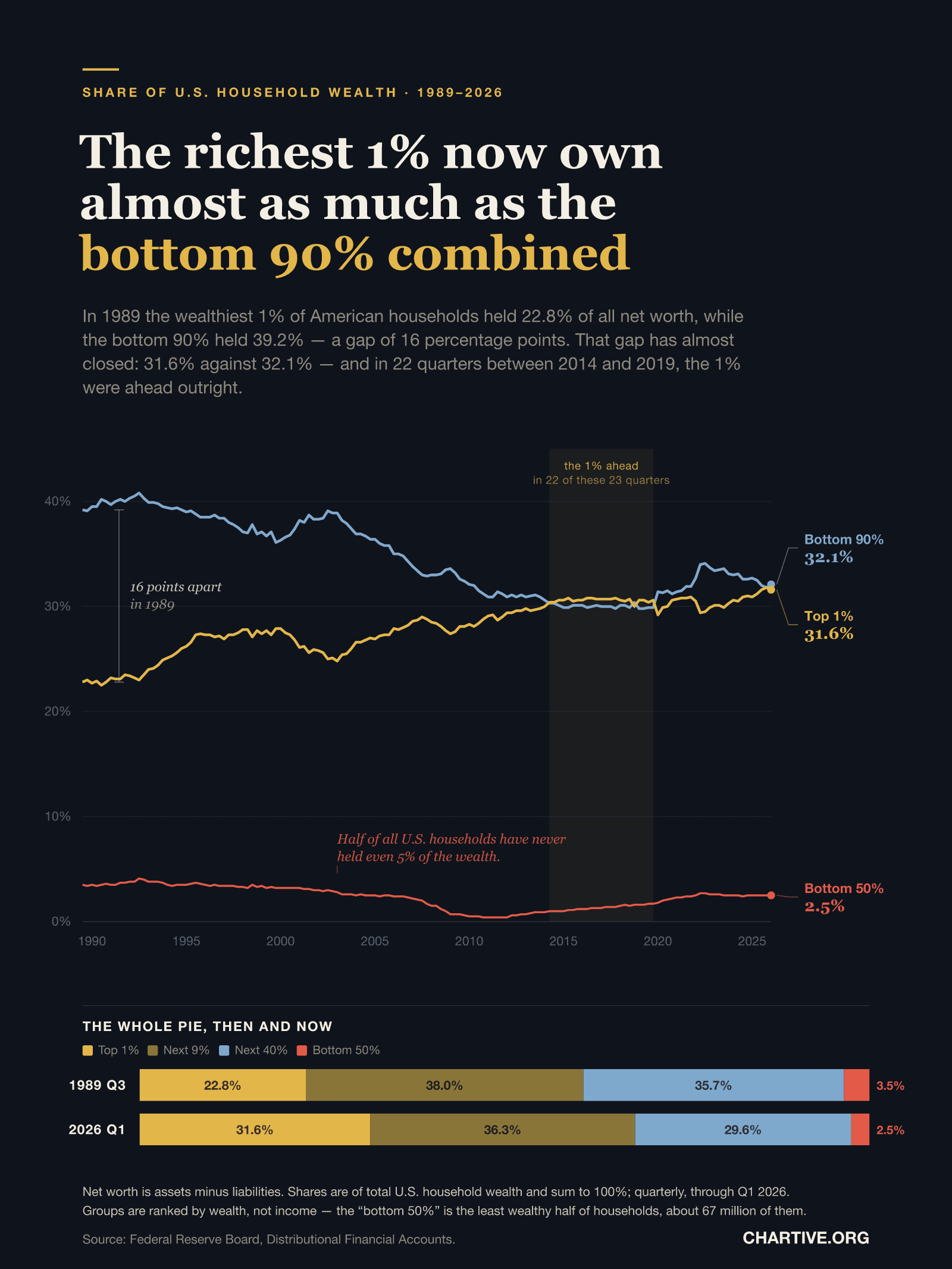
The richest 1% now own almost as much as the bottom 90% combined
In 1989 the wealthiest 1% of American households held 22.8% of all net worth and the bottom 90% held 39.2% — a gap of 16 percentage points. That gap has almost closed: 31.6% against 32.1%.
Chartive Editorial
Technology
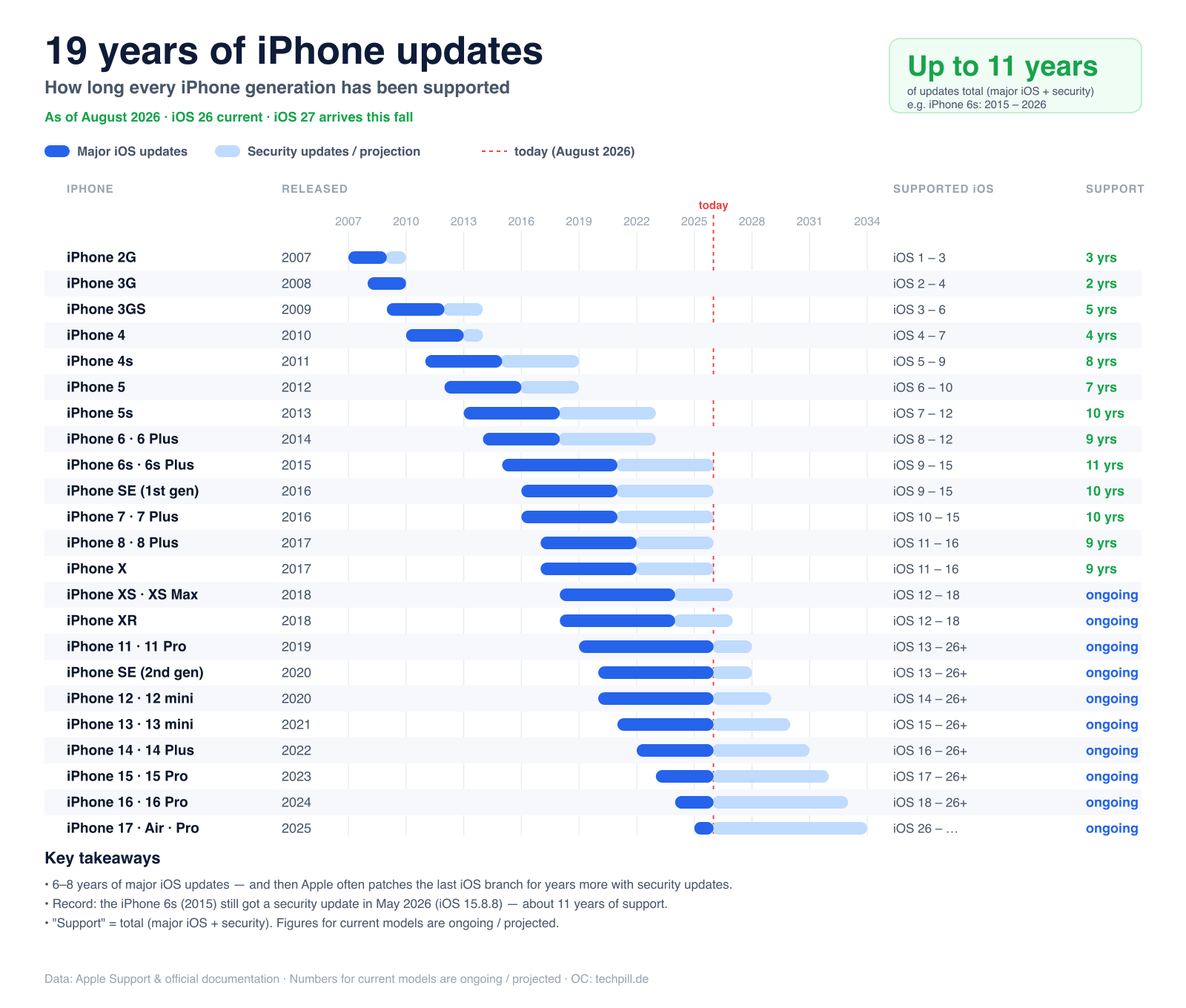
19 years of iPhone updates
How long every iPhone generation has been supported, from the original iPhone to the iPhone 17.
Chartive Editorial
Latest
See all →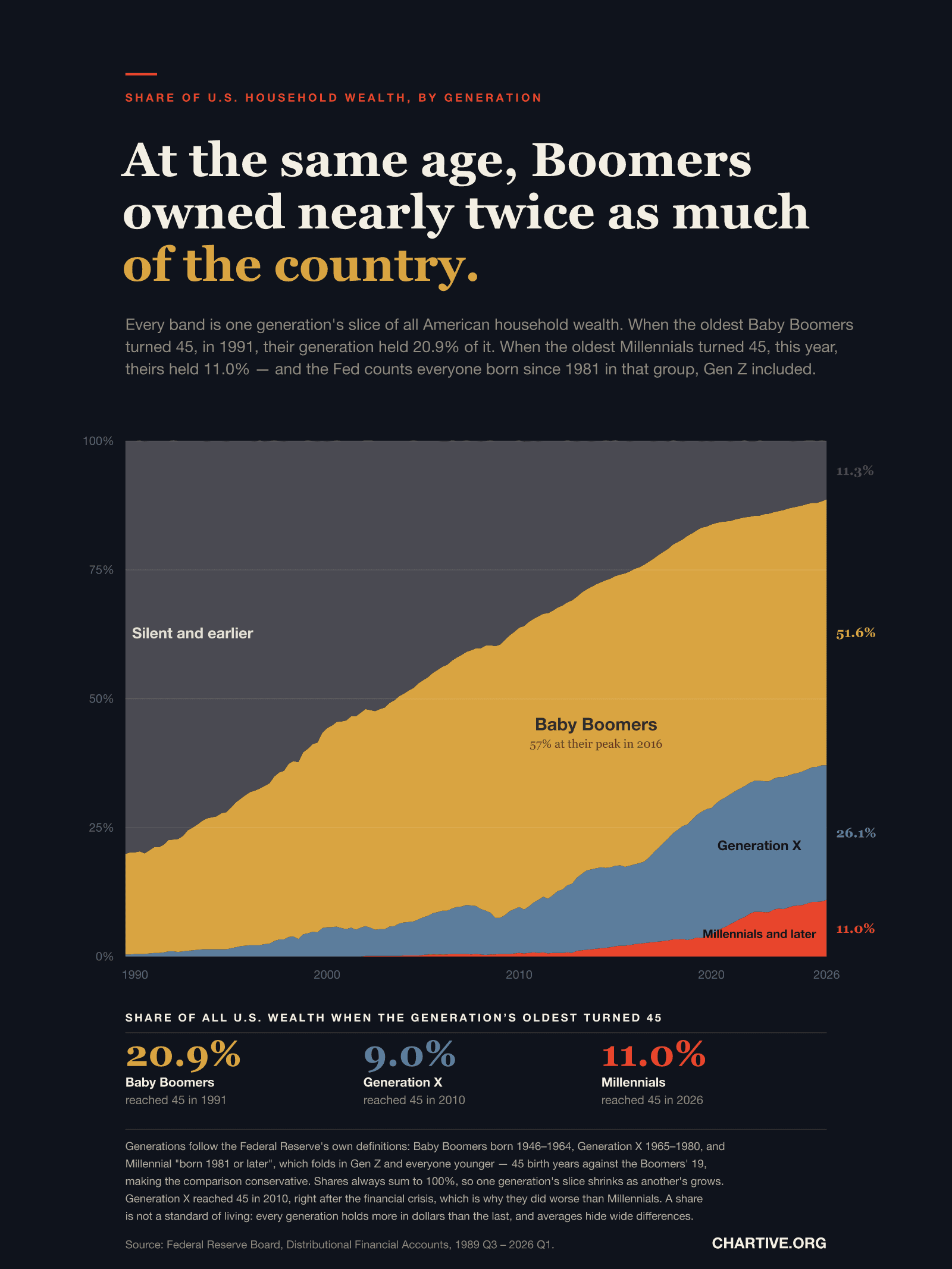
Economy
At the same age, Boomers owned nearly twice as much of the country
When the oldest Baby Boomers turned 45, in 1991, their generation held 20.9% of all US household wealth. When the oldest Millennials turned 45, in 2026, theirs held 11.0%.
Chartive Editorial
Climate
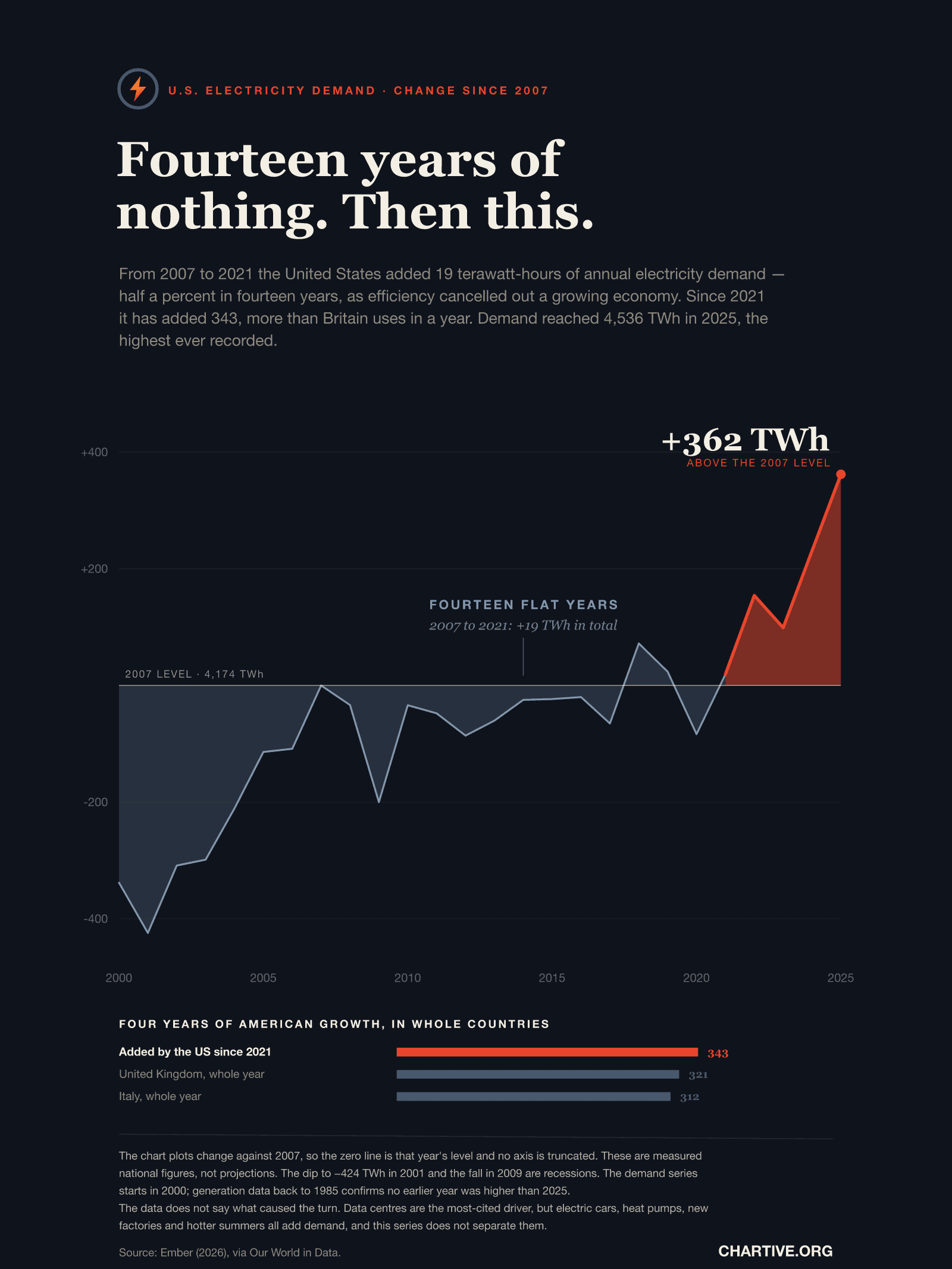
Fourteen years of nothing. Then this.
From 2007 to 2021 the United States added 19 terawatt-hours of annual electricity demand — half a percent in fourteen years. Since 2021 it has added 343, more than Britain uses in a year.
Chartive Editorial
Demographics
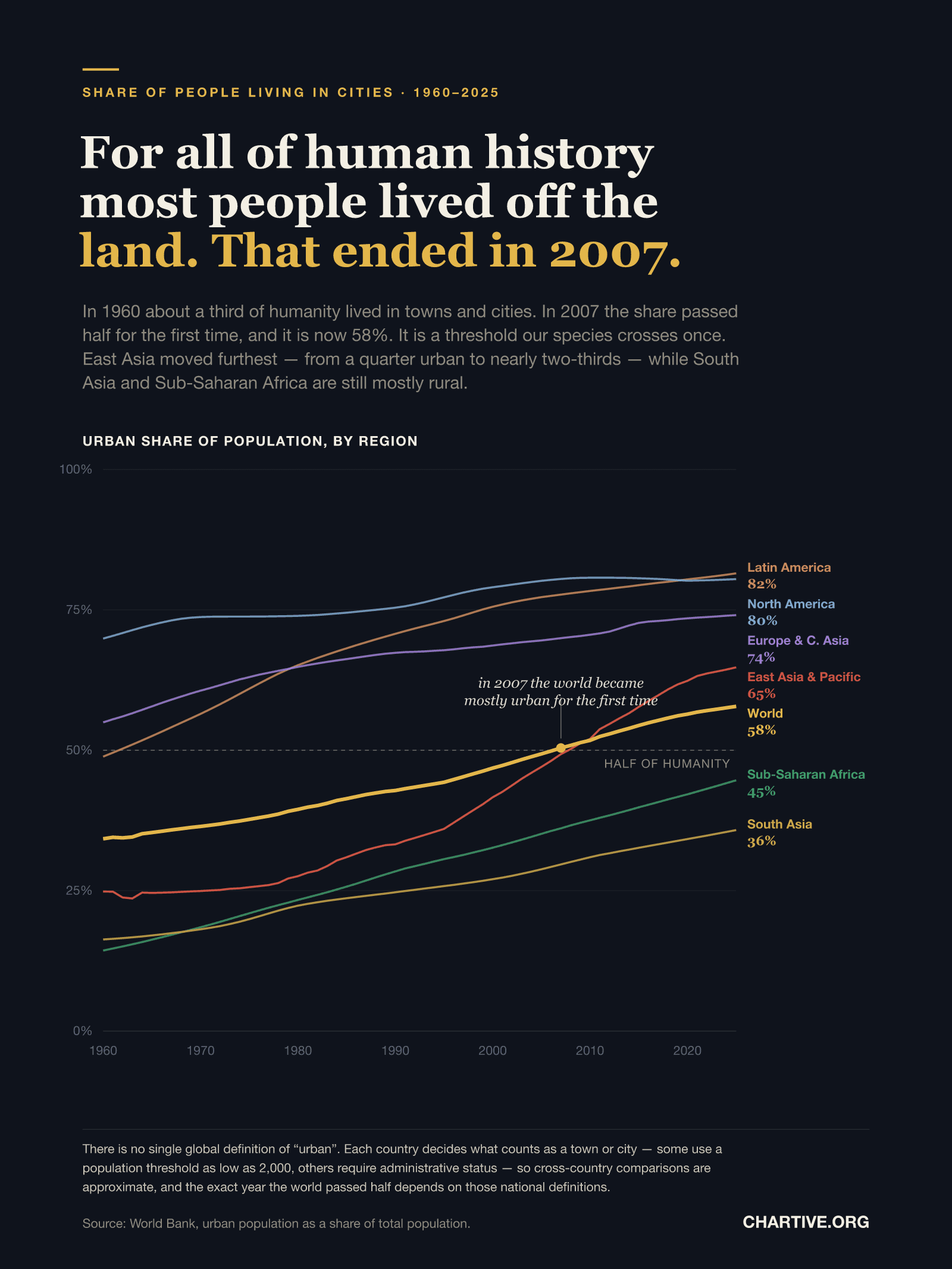
For all of human history most people lived off the land. That ended in 2007.
In 1960 about a third of humanity lived in towns and cities. In 2007 the share passed half for the first time, and it is now 58%. It is a threshold our species crosses only once.
Chartive Editorial
Technology
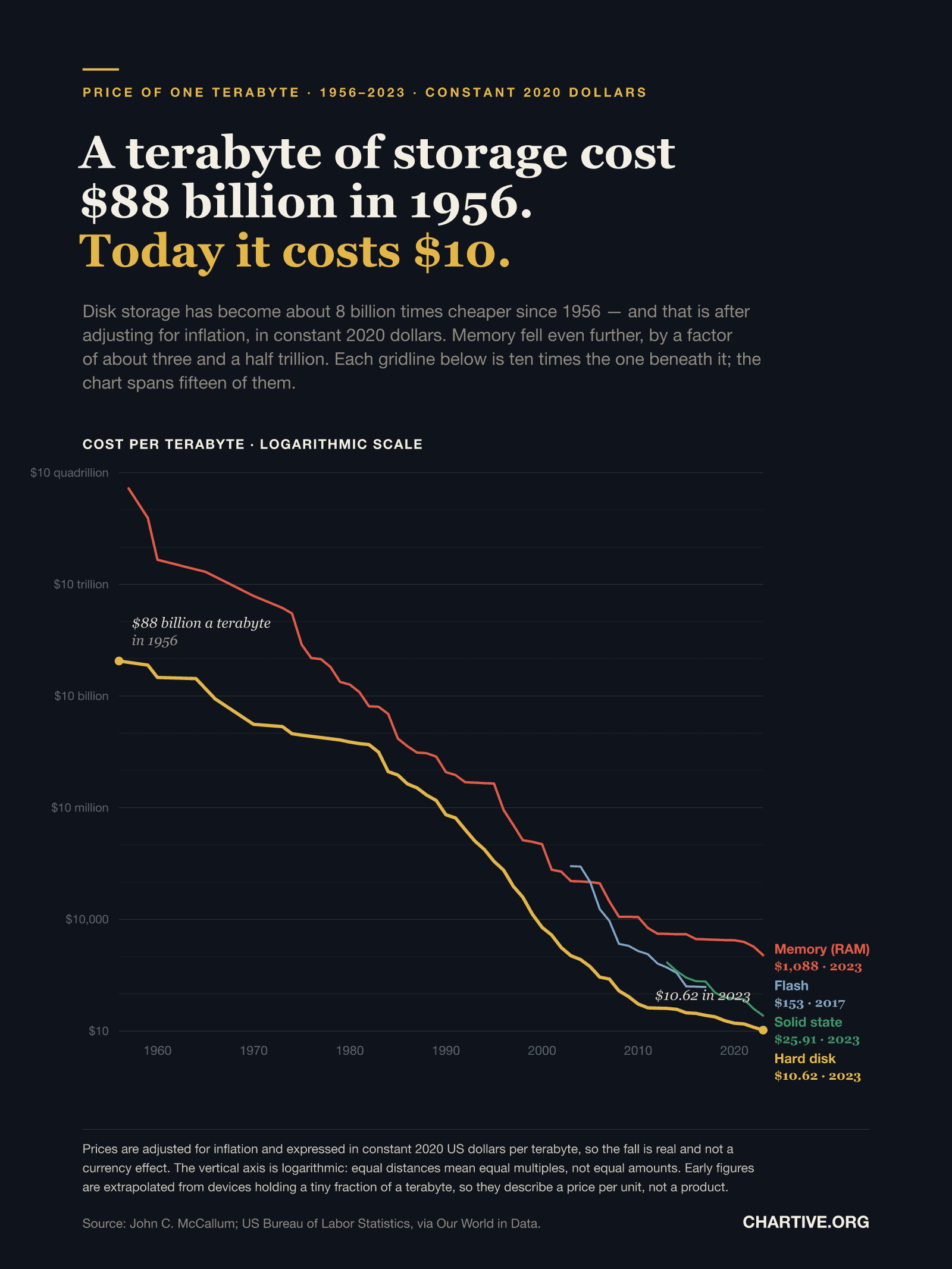
A terabyte of storage cost $88 billion in 1956. Today it costs $10.
Disk storage has become about 8 billion times cheaper since 1956 — and that is after adjusting for inflation, in constant 2020 dollars. Computer memory fell even further, by a factor of about three and a half trillion.
Chartive Editorial
Health
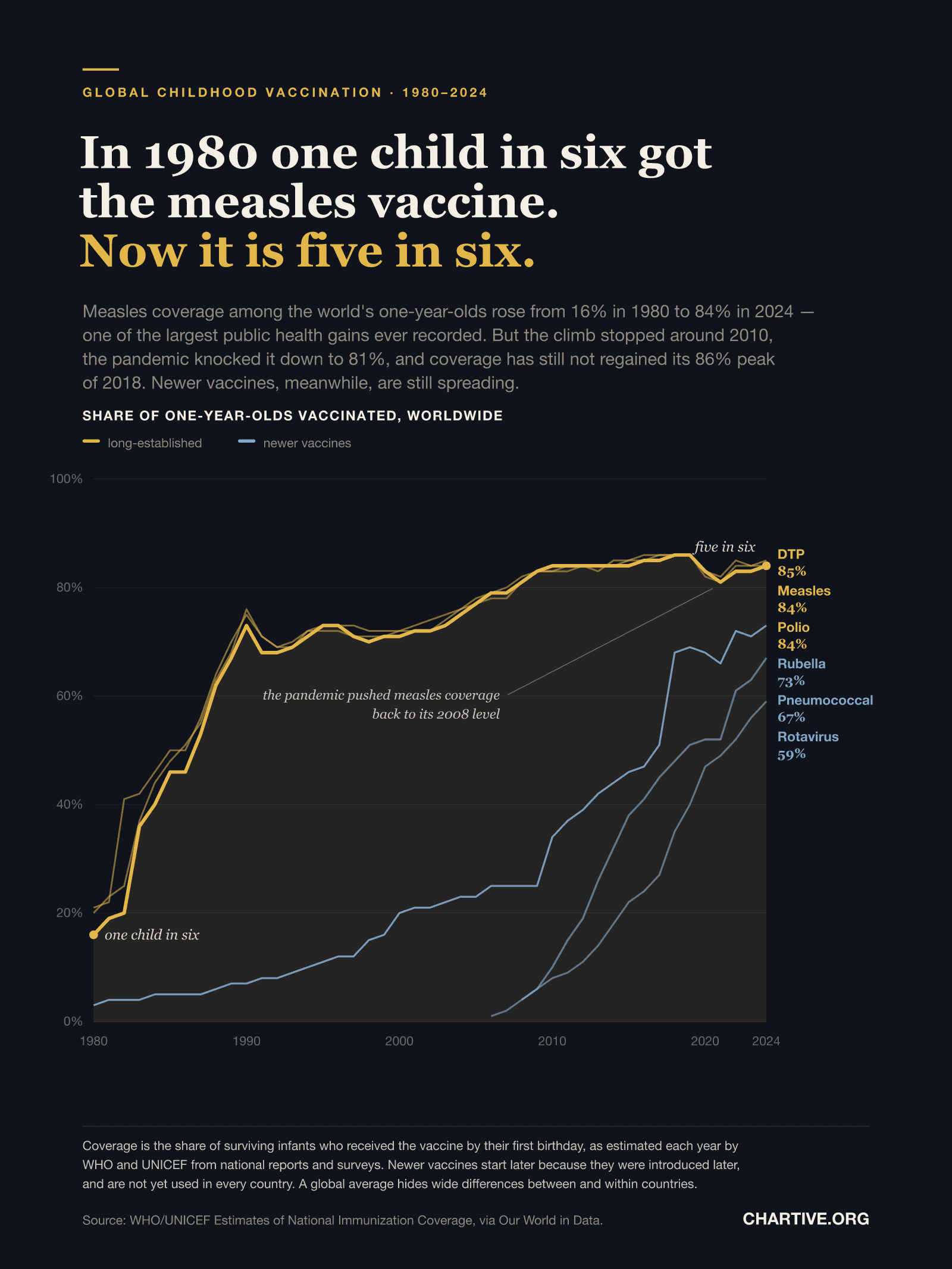
In 1980 one child in six got the measles vaccine. Now it is five in six.
Global measles coverage among one-year-olds rose from 16% in 1980 to 84% in 2024 — one of the largest public health gains ever recorded. But the climb stopped around 2010, and coverage has still not regained its 86% peak of 2018.
Chartive Editorial
Economy
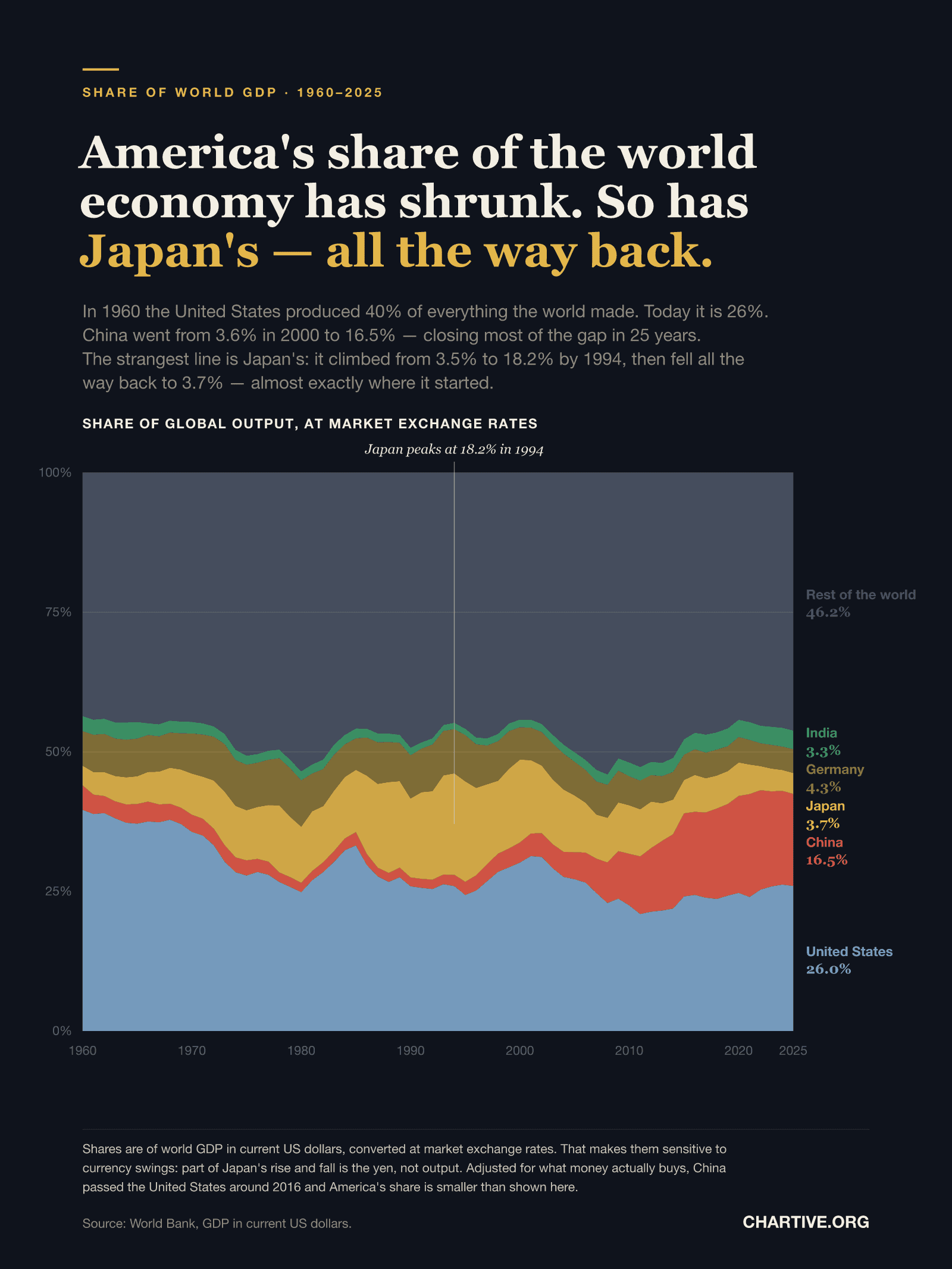
America's share of the world economy has shrunk. So has Japan's — all the way back.
In 1960 the United States produced 40% of everything the world made; today it is 26%. China went from 3.6% in 2000 to 16.5%. Japan climbed to 18.2% by 1994 and then fell back to 3.7% — almost exactly where it started.
Chartive Editorial
Society
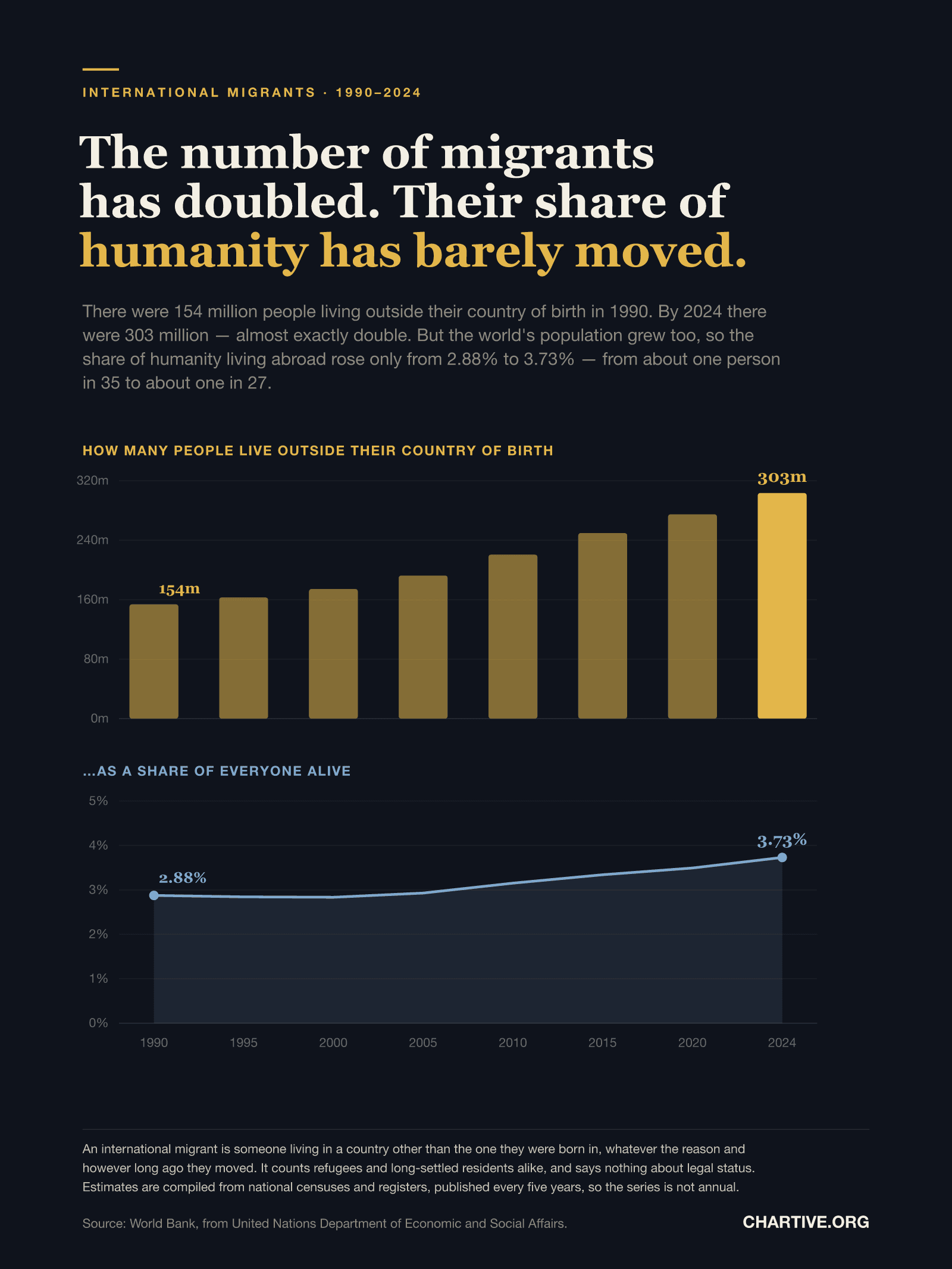
The number of migrants has doubled. Their share of humanity has barely moved.
There were 154 million people living outside their country of birth in 1990. By 2024 there were 303 million — almost exactly double. But because the world's population grew too, the share living abroad rose only from 2.88% to 3.73%.
Chartive Editorial
Economy
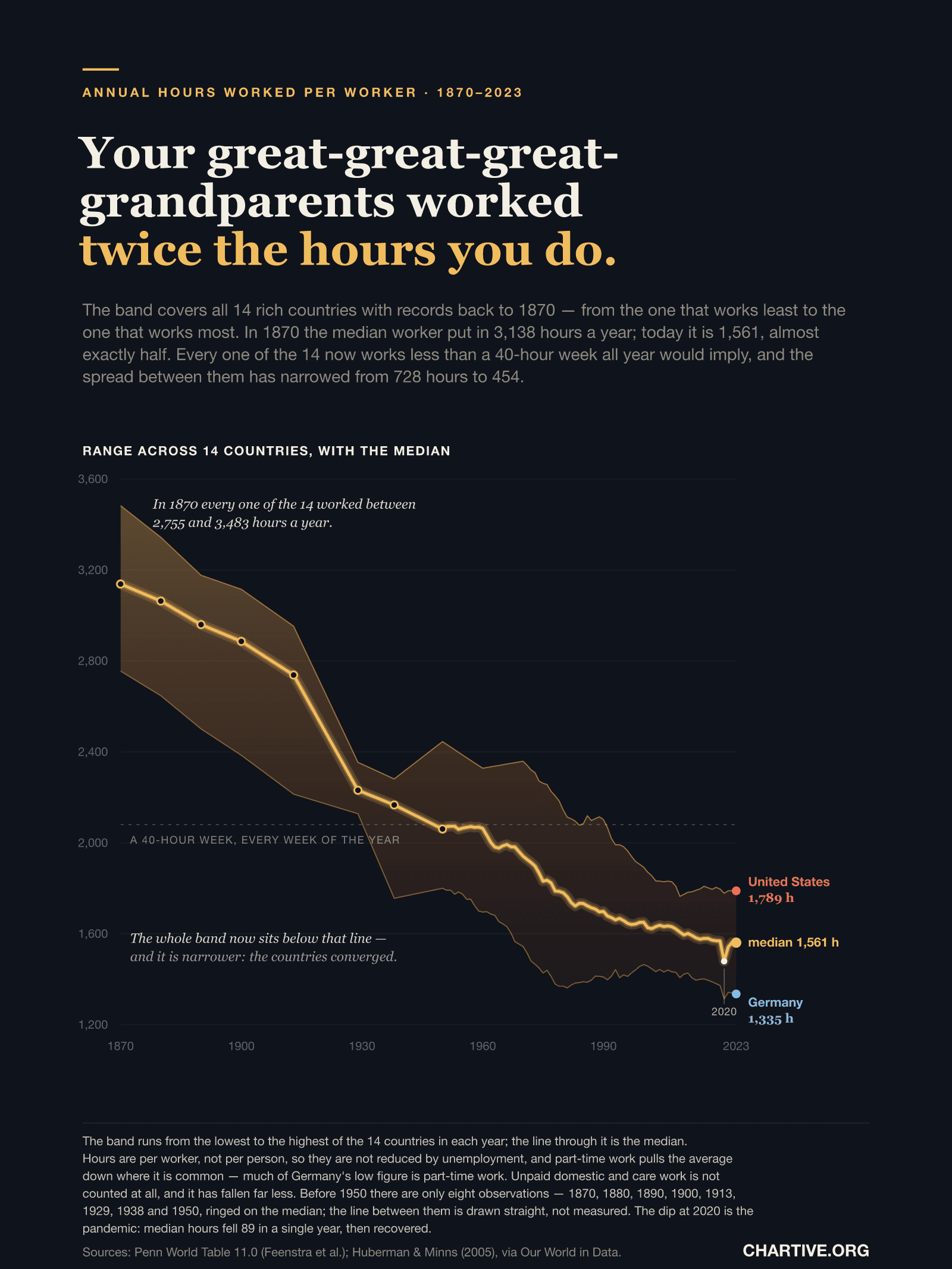
Your great-great-great-grandparents worked twice the hours you do
Across the 14 rich countries with records back to 1870, the median worker put in 3,138 hours a year. Today it is 1,561 — almost exactly half. Every one of them now works less than a 40-hour week all year would imply.
Chartive Editorial
Rising creators
See leaderboard →Explore by topic
See all →The world, explained in five charts.
Every Thursday: the best new data stories — each with its sources and the raw data to download. Free, unsubscribe anytime.
Double opt-in — we'll email you to confirm. Unsubscribe anytime. See our privacy policy.